
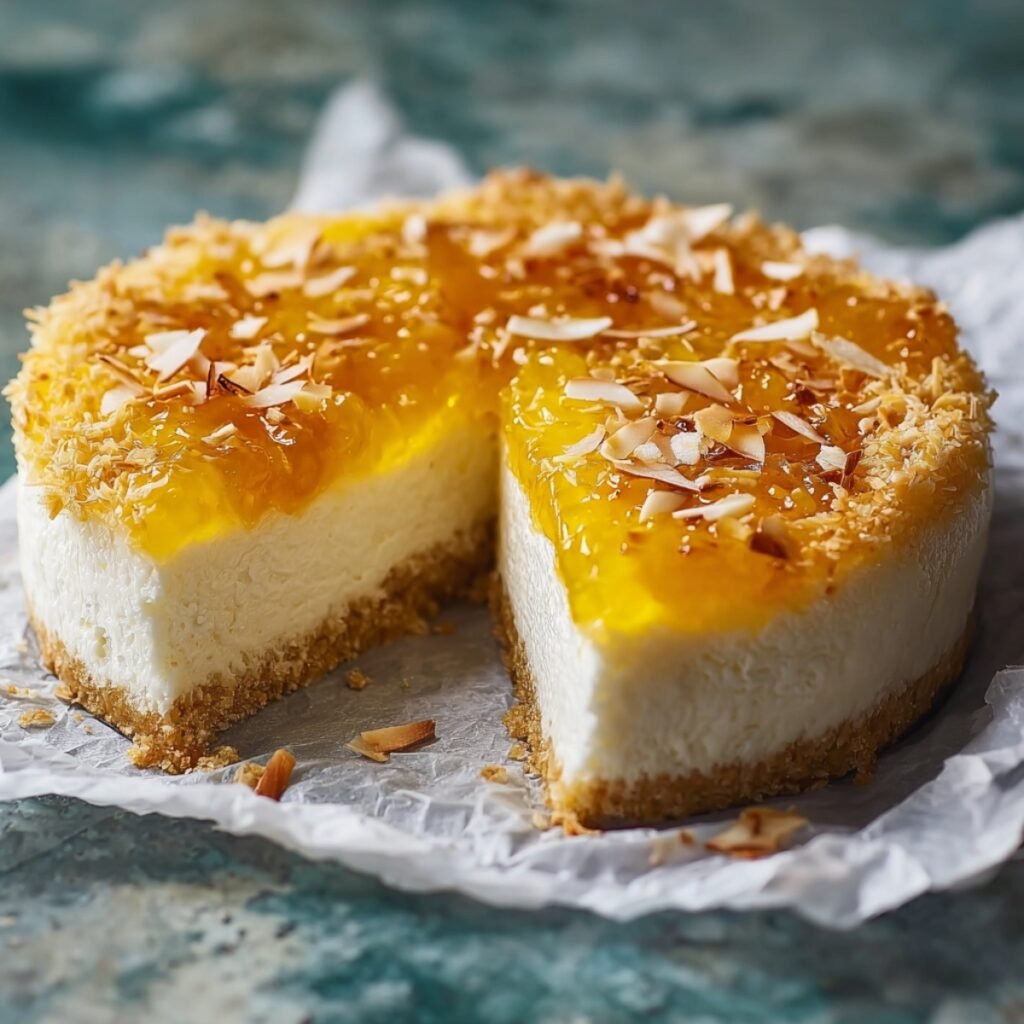
The kitchen smells incredibly sweet today as the tropical, nutty aroma of toasted coconut and warm milk fills the air. Anna is happily sprinkling a handful of snowy white flakes over the golden surface of our pan, her tiny fingers working with great care. We are preparing a Sticky Coconut Cake together, a treat that feels like a sun-drenched holiday in every bite. This dense, chewy, and comforting dessert makes our busy afternoon feel like a wonderfully cozy, shared kitchen celebration.
Jump to:
Why You Will Love This Sticky Coconut Cake
Finding Filipino cake flavors that deliver that authentic, melt-in-your-mouth texture is a beautiful victory. This sticky coconut cake recipe easy enough for any home baker is a celebration of traditional textures and modern simplicity. Anna loves the "bouncy" feel of the cake, and I love that this sticky coconut cake with coconut milk is naturally gluten-free when using rice flour. It's a classic Filipino cake that serves as the perfect centerpiece for a family gathering or a festive Christmas Bibingka celebration.
How To Make Sticky Coconut Cake
My first attempt at a Bibingka recipe with rice flour resulted in a cake that was far too dry because I didn't balance the liquids correctly. Anna watched me pull the crumbly mess out of the oven and suggested we "make it more splashy" next time. We learned together that the high fat content in full-fat coconut milk is the absolute secret to that signature "sticky" finish. Now, seeing the glistening, moist interior of the cake as we slice into it is our favorite shared kitchen triumph.
Main Ingredients
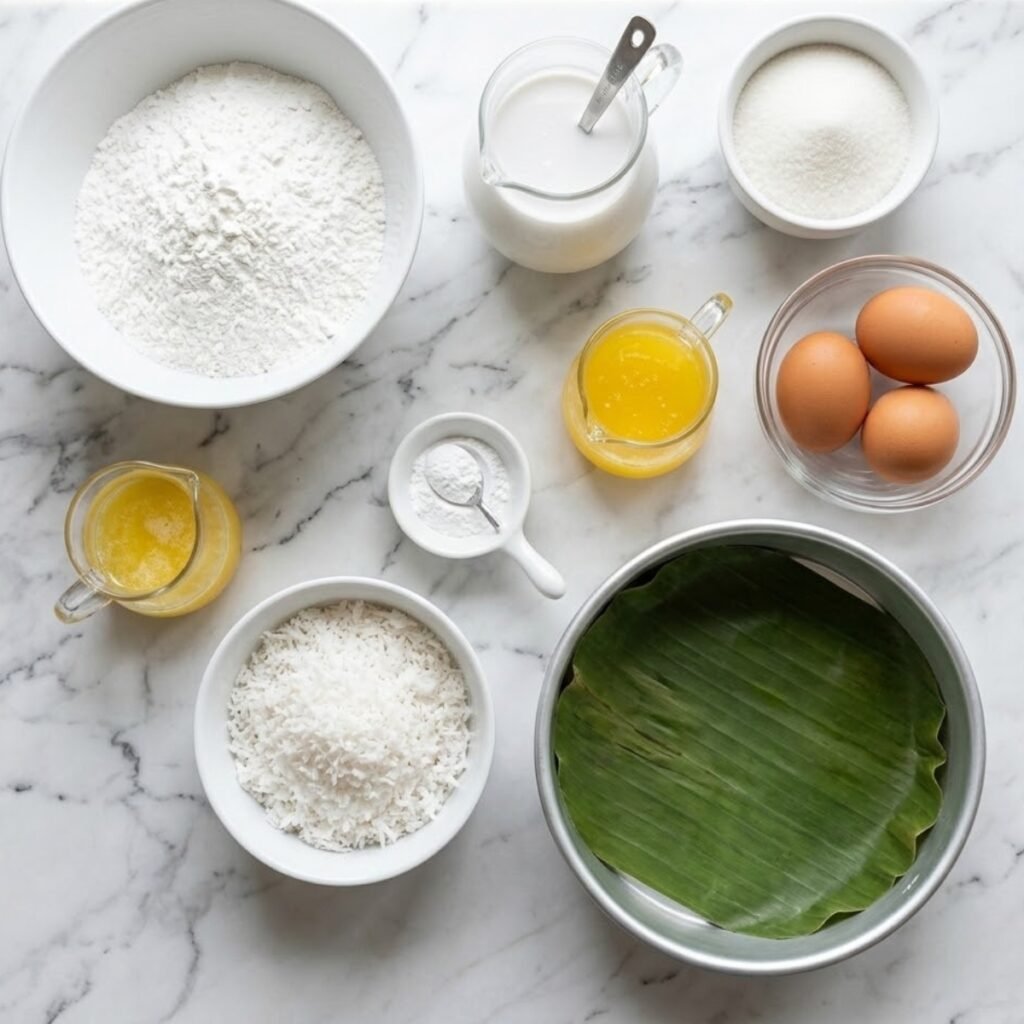
- Glutinous Rice Flour (2 cups, provides the essential chewy and "sticky" texture characteristic of Filipino rice cake)
- Full-Fat Coconut Milk (1.5 cups, adds a rich, creamy depth and ensures the cake stays incredibly moist)
- Granulated Sugar (1 cup, balances the earthy flavor of the rice with a clean, delicate sweetness)
- Large Eggs (3 count, provides structure and a beautiful golden hue to the finished bake)
- Butter (¼ cup melted, adds a savory richness that complements the sweet coconut)
- Grated Coconut (½ cup, mixed into the batter and sprinkled on top for a delightful textural crunch)
- Baking Powder (1 teaspoon, gives the dense cake a slight lift so it remains soft rather than heavy)
Step by Step Instructions
1. Prepare the Base
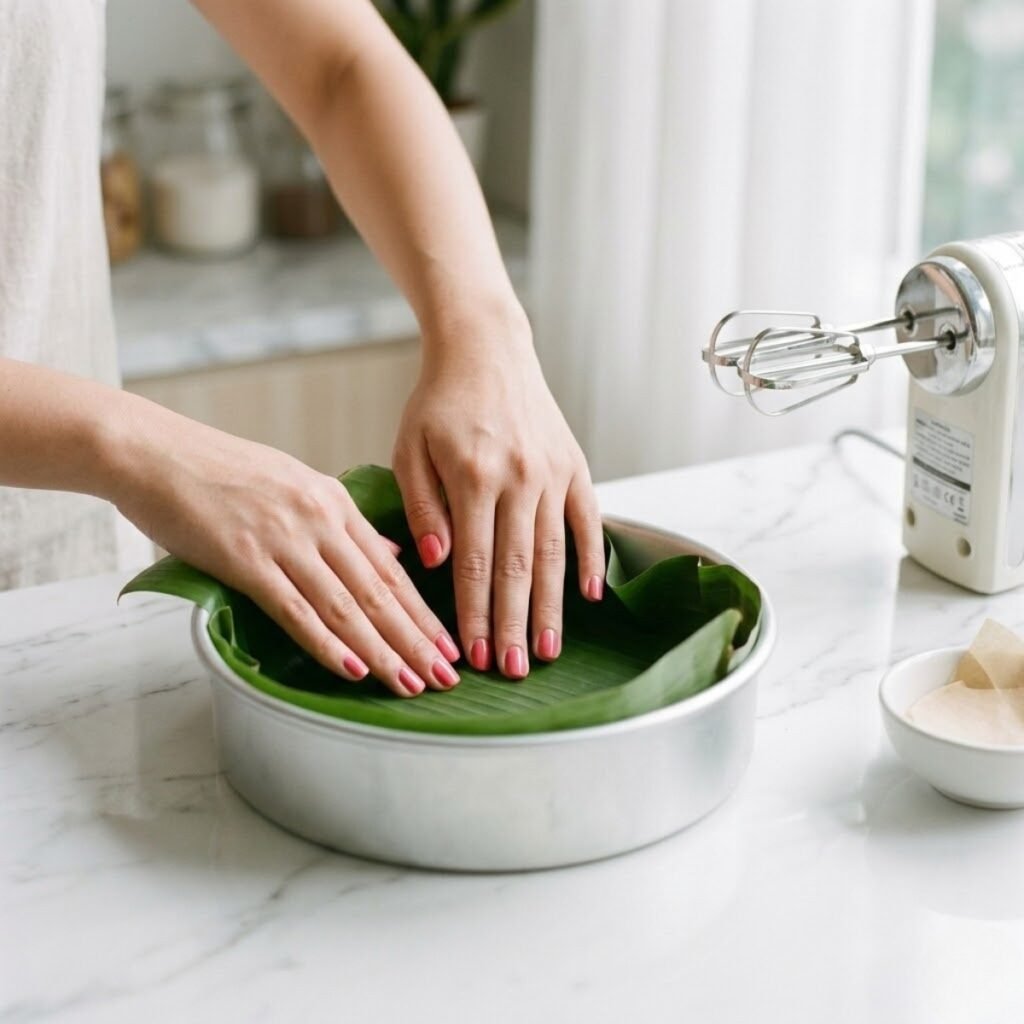
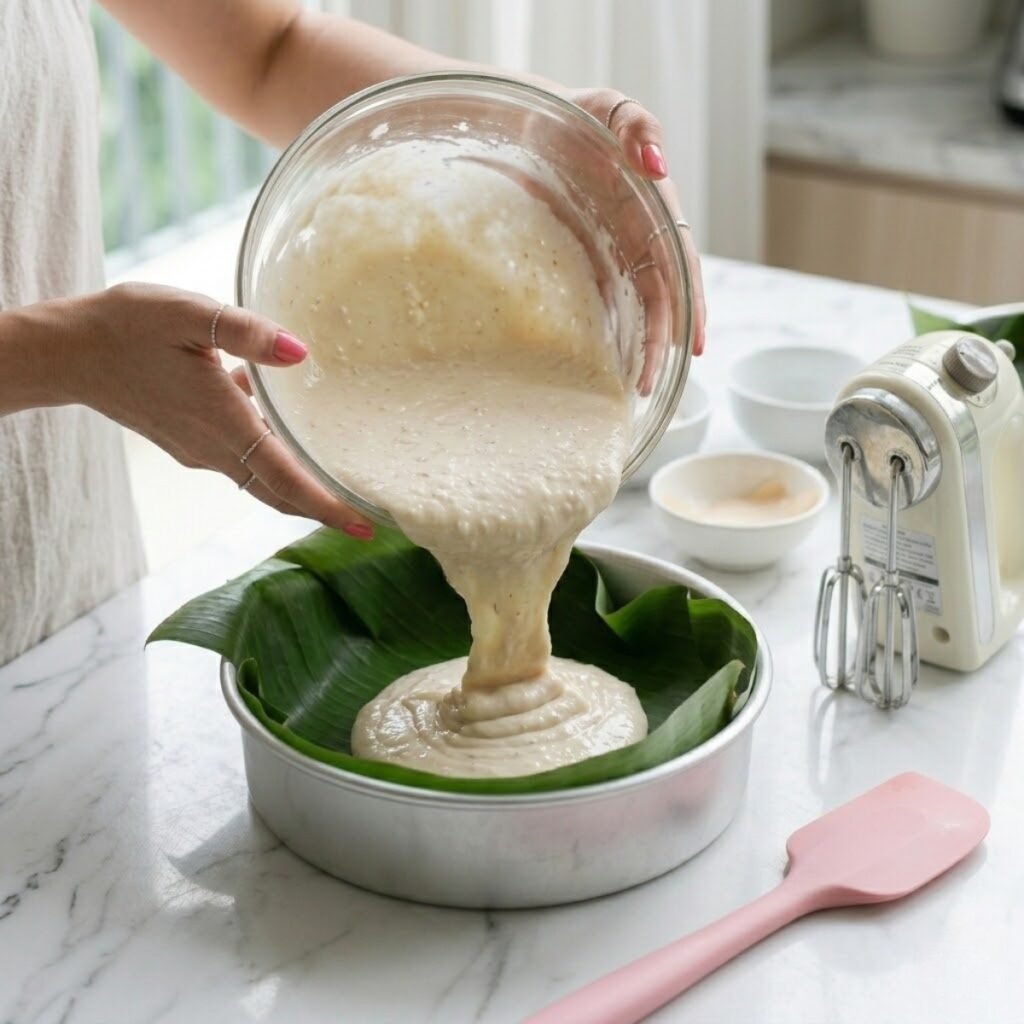
- Line an 8-inch round or square baking pan with parchment paper or a traditional banana leaf for an authentic touch.
- Whisk the glutinous rice flour, sugar, and baking powder together in a large bowl to remove any lumps.
- If you are looking for a Mary Berry coconut cake recipe style, ensure your dry ingredients are perfectly sifted for a finer crumb.
- Preheat your oven to 350°F so it is perfectly ready for your tropical masterpiece.
2. Mix the Liquids
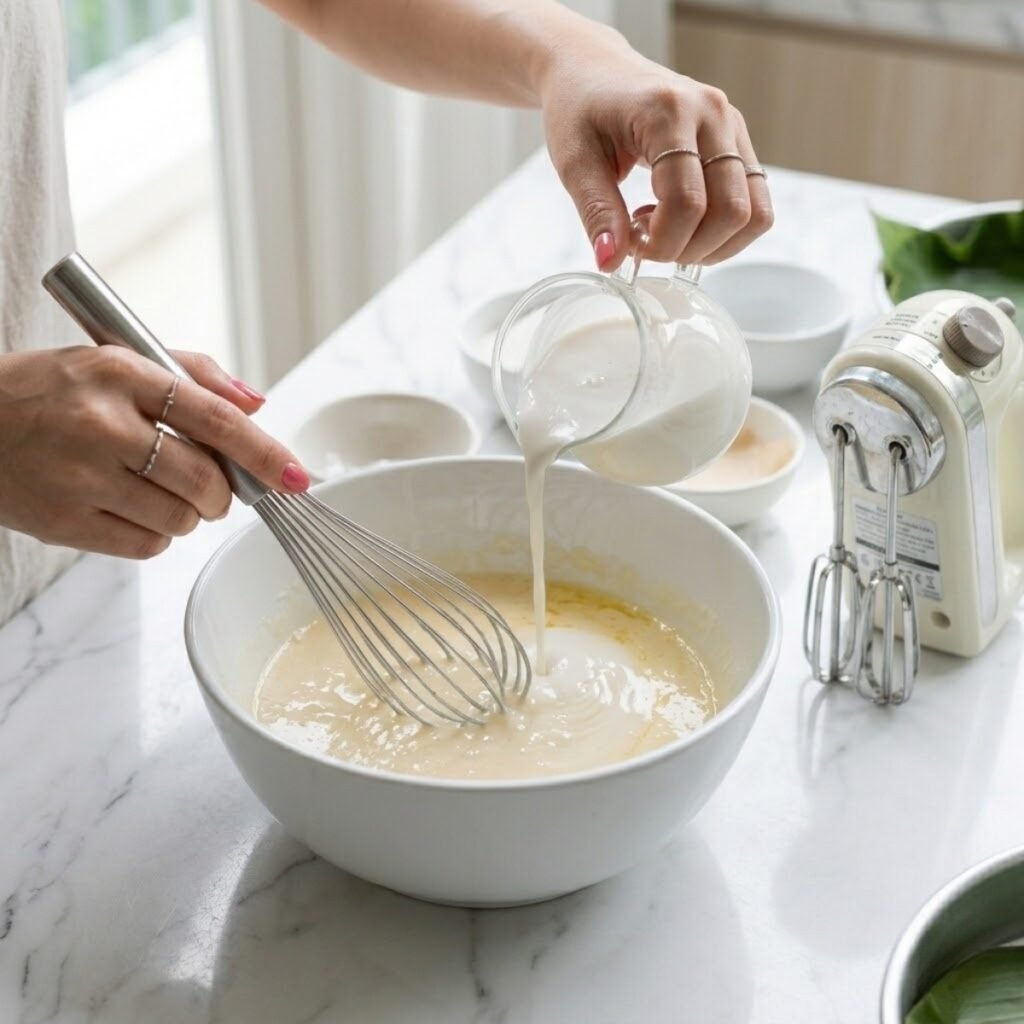
- In a separate glass pitcher, beat the eggs lightly and stir in the coconut milk and melted butter.
- Pour the wet ingredients into the dry mixture slowly, whisking constantly to create a smooth, thick batter.
- Stir in half of the grated coconut, ensuring it is distributed evenly so every bite has a bit of texture.
- The batter should be pourable but much thicker than a standard sponge cake batter.
3. The Golden Bake
- Pour the batter into the prepared pan and smooth the top with a spatula until it is perfectly level.
- Bake for 20 minutes before briefly removing the pan to sprinkle the remaining grated coconut over the top.
- Return the cake to the oven for another 15 to 20 minutes until the edges are deep golden brown and the center is set.
- The cake will feel firm to the touch but will have a slight, characteristic "give" when pressed.
4. Glaze and Set
- For an extra sticky finish, brush the warm cake with a little extra coconut milk mixed with a teaspoon of sugar.
- Allow the cake to cool in the pan for at least thirty minutes; the "sticky" texture develops as it cools.
- Slice into traditional wedges or squares and serve while still slightly warm for the best flavor experience.
- This simple coconut cake recipe is best enjoyed with a hot cup of tea or coffee to balance the richness.
Sticky Coconut Cake Variations
Traditional Christmas Bibingka
- Top the cake with slices of salted duck egg and a sprinkle of grated cheese before the final stage of baking.
- This version creates a complex salty-sweet profile that is the hallmark of a Traditional Christmas Bibingka.
- Serve it on a scorched banana leaf to infuse the cake with a subtle, smoky aroma that is truly unforgettable.
Bibingka Recipe With Glutinous Rice Flour
- Use 100% glutinous rice flour (Malagkit) to achieve a texture that is almost like a mochi-cake cross.
- This variation is much "stickier" and denser, making it a very filling and satisfying traditional treat.
- It is one of the most popular Filipino rice cake styles found in street markets across the islands.
Sticky Coconut Cake With Mango
- Fold small cubes of fresh, ripe mango into the batter before baking for a burst of tropical acidity.
- The fruit melts slightly into the cake, creating pockets of intense flavor that pair beautifully with the coconut.
- This is a modern, fruity twist on the bibingka coconut cake that is perfect for summer parties.
Substitutions
- Coconut Milk: If you want a lighter version, you can use light coconut milk, though the "stickiness" will be reduced.
- Rice Flour: If you don't have rice flour, all-purpose flour can be used, but you will lose the traditional chewy Filipino texture.
- Butter: Coconut oil is a fantastic dairy-free substitute that actually enhances the overall coconut aroma of the cake.
- Sugar: Brown sugar or coconut sugar can be used for a deeper, more caramel-like flavor profile.
Equipment
- 8-inch Baking Pan
- Whisk and Large Bowl
- Parchment Paper
- Pastry Brush
Emma's Tip: If you want a truly professional finish, place the cake under the broiler for the last 60 seconds to toast the coconut on top to a perfect dark brown!
Storage Tips
Make Ahead Strategy
- This cake actually tastes better a few hours after baking as the moisture redistributes throughout the rice flour.
- You can bake it the night before and keep it at room temperature, making it a stress-free dessert for guests.
- This sticky coconut cake recipe is incredibly resilient and doesn't dry out as quickly as flour-based cakes.
Refrigeration
- Store leftovers in an airtight container at room temperature for up to two days.
- If you need to keep it longer, refrigerate for up to five days, but be sure to wrap it tightly in plastic wrap.
- The cake will firm up in the fridge, so a quick 10-second zap in the microwave will restore its soft, sticky texture.
Freezing and Reheating
- You can freeze individual slices wrapped in foil and placed in a freezer bag for up to two months.
- Thaw at room temperature for an hour before serving to maintain the integrity of the rice flour.
- Avoid reheating in a high-heat oven, as this can cause the edges to become too hard and lose their "sticky" charm.
My Grandma's Magic Touch
My grandmother always said that coconut was the "butter of the islands." She used to grate the coconut by hand, a rhythmic sound that meant something special was coming. I shared that story with Anna today as we used our modern grater. She loved the "coconut snow" and took great pride in making sure every corner of the cake was covered. Passing down the appreciation for these humble, tropical ingredients makes our baking feel like a quiet celebration of our heritage.
FAQs
Why is my sticky coconut cake too mushy in the middle?
This usually happens if the cake is taken out of the oven too early. Because of the coconut milk and rice flour, it won't have a dry "crumb" like a regular cake; however, a toothpick should still come out clean without wet batter attached.
What is the difference between this and a regular coconut sponge?
A sponge cake uses wheat flour and leavening to create air. This Filipino coconut cake uses rice flour to create a dense, chewy, and "sticky" texture that is much more substantial and unique.
Can I make this as a bibingka with grated coconut only?
While you can omit the coconut milk and use regular milk, you will lose the intense coconut flavor. Using both bibingka with grated coconut and coconut milk provides the best depth of flavor.
A Tropical Slice and Toasted Toppings
The kitchen is warm and quiet as we finally dig into our first slices, the toasted coconut crunching softly against the chewy cake. Anna is delighted with the "stickiness," showing me how it stays on her fork. It is a grounding, celebratory dish, just as satisfying as a rich Cream Cheese Cheesecake. If we're in the mood for something fruity later this week, we might whip up a Watermelon Fruit Salad, or perhaps a Chocolate Orange Cheesecake for a more decadent evening. For now, this coconut cake is the perfect tropical escape.
Related
Looking for other recipes like Sticky Coconut Cake? Try these:


Leave a Reply