
The ramekin was already warm from the oven when Anna leaned over and spotted the yolks sitting soft and orange in the middle of all that melted feta and tomato. "The eggs look like suns," she said. I handed her the spoon and watched her break the first yolk slowly, letting it run into the edges where the cheese had turned golden and slightly crisp against the dish. That morning, Baked Feta Eggs became the breakfast we make when the weekend deserves something better than ordinary.
Jump to:
Why You Will Love This Baked Feta Eggs Recipe
This dish delivers a breakfast that feels slow and considered without actually taking long to put together. The feta melts into the tomatoes and spinach while the eggs bake on top, and the whole thing comes out of the oven in one small dish that goes straight to the table. Anna loves scooping it onto crusty bread and eating it like a warm dip. It works just as well for a quiet solo breakfast as it does set out between two people on a weekend morning when neither of you wants to stand at the stove.
How To Make Baked Feta Eggs
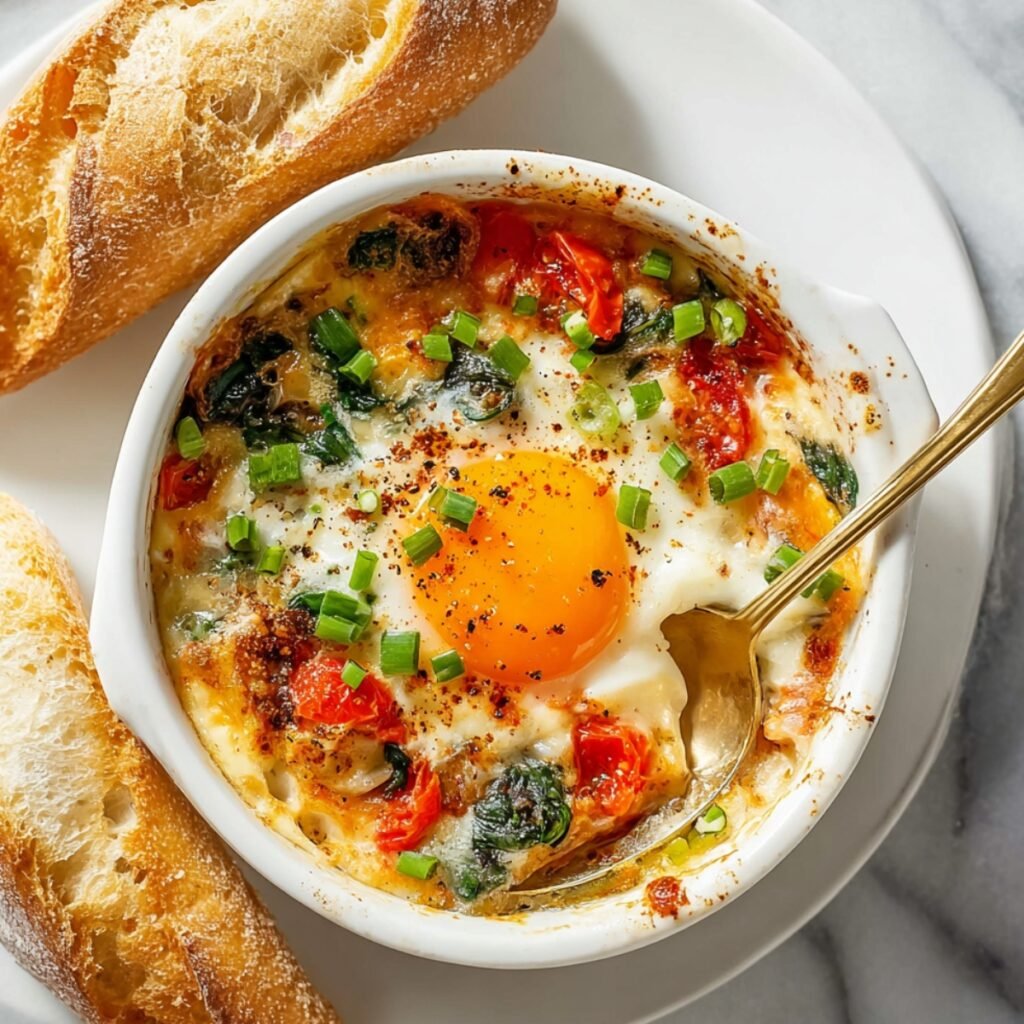
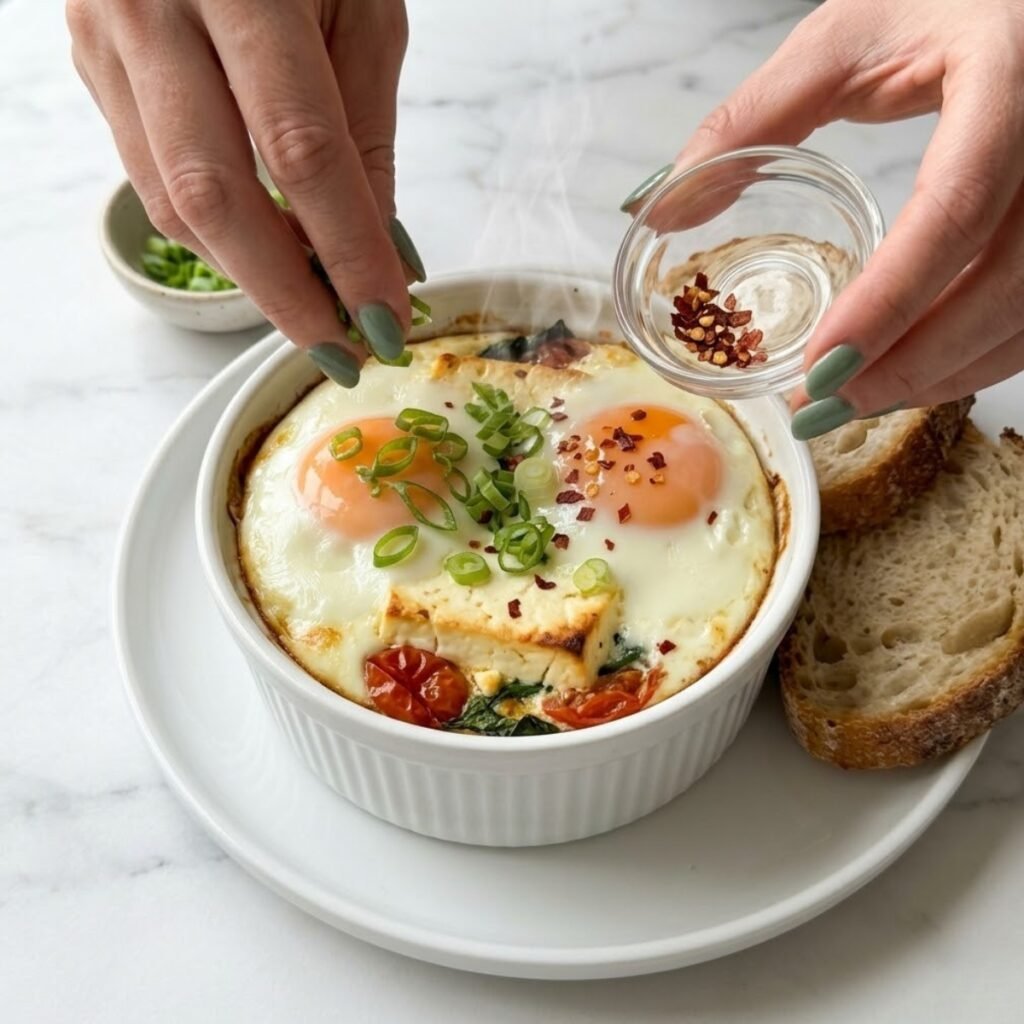
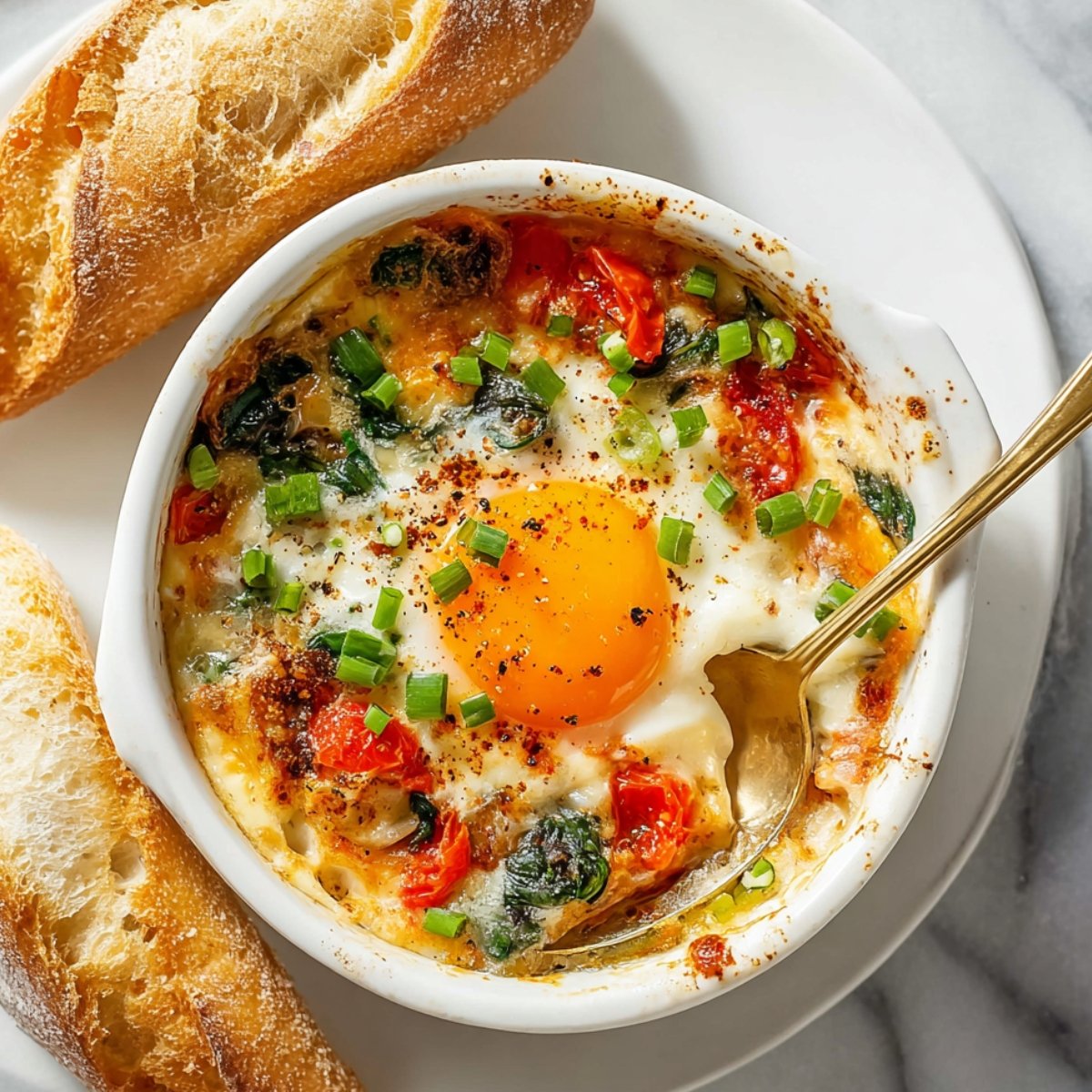
The first time I made this, I added the eggs too early and the yolks turned chalky and fully cooked through by the time the feta had properly softened and the tomatoes had burst and collapsed into the base of the ramekin. Anna ate it without complaint but looked at the yolks the way she looks at overripe bananas. The second attempt I pre-baked the feta and vegetable base alone for 10 minutes before adding the eggs, and that extra step changed everything. The yolks came out exactly as they look in the image, set whites with the orange still pooled and runny in the center, and the base underneath was already bubbling and fragrant when the eggs went in.
Main Ingredients
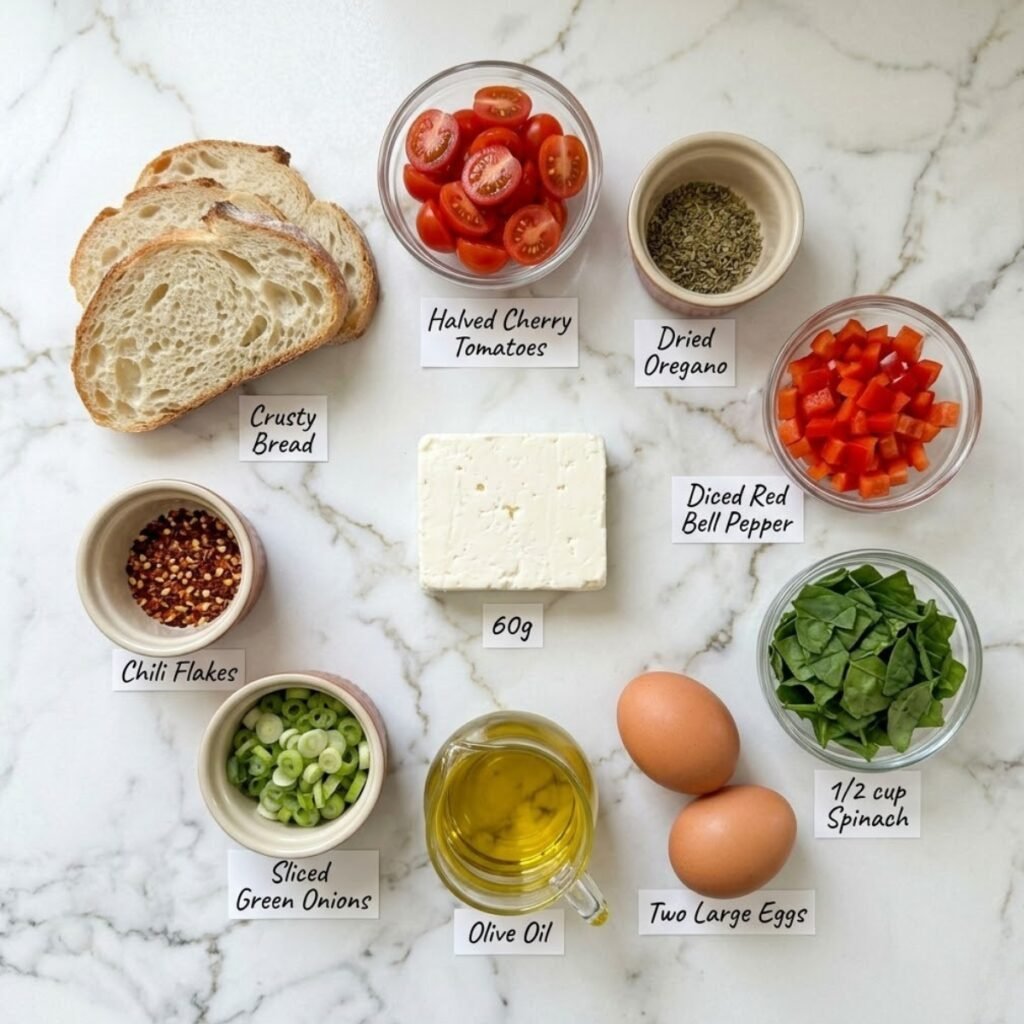
- 60g block feta cheese (the main flavor base; a firm, brined Greek-style feta holds its shape during the first bake and melts into the vegetables as a creamy, salty layer during the second)
- 2 large eggs (cracked carefully over the pre-baked base so the yolks land centered and undamaged; room temperature eggs set more evenly under oven heat than cold eggs straight from the refrigerator)
- ½ cup cherry tomatoes, halved (their cut sides face down against the feta so they release juice directly into the base and collapse into the dish during baking)
- ½ cup baby spinach, roughly torn (wilts quickly under the heat of the pre-bake and creates the dark green patches visible in the finished dish)
- ¼ red bell pepper, diced small (adds a mild sweetness and color contrast that runs through the vegetable base beneath the eggs)
- 1 tablespoon olive oil (drizzled over the feta and vegetables before the first bake to help the feta soften and the tomatoes blister at the edges)
- ¼ teaspoon dried oregano (scattered over the base before baking; it blooms in the oven heat and perfumes the whole dish)
- ¼ teaspoon chili flakes (adds background heat that lifts the richness of the feta and egg without making the dish noticeably spicy)
- Salt and black pepper to taste (use light salt since the feta is already brined and will season the base considerably during baking)
- 2 tablespoons green onions, finely sliced (scattered over the finished dish directly from the oven for a fresh, grassy bite that balances the richness)
- Crusty bread for serving (2 slices per person, toasted or plain, for scooping directly into the ramekin the way it appears in the image)
Step by Step Instructions
Step 1: Preheat the Oven and Prepare the Ramekin
- Preheat the oven to 400°F (200°C) and allow it to reach full temperature before anything goes in; placing the ramekin into a partially heated oven leads to uneven cooking where the base of the dish stays cold longer than the top.
- Choose an oven-safe ramekin or small baking dish with at least 10 oz capacity so the feta, vegetables, and eggs all fit in a single layer without being stacked too deeply, which would prevent the eggs from cooking through evenly.
- Drizzle the inside of the ramekin with half the olive oil and use your fingertip or a pastry brush to coat the base and sides, which prevents the feta from sticking and helps the edges of the dish develop the slightly caramelized look visible in the image.
- Set the prepared ramekin on a small baking sheet so it is easier to transfer in and out of the oven safely without gripping the hot edges of the dish directly.
Step 2: Build the Feta and Vegetable Base
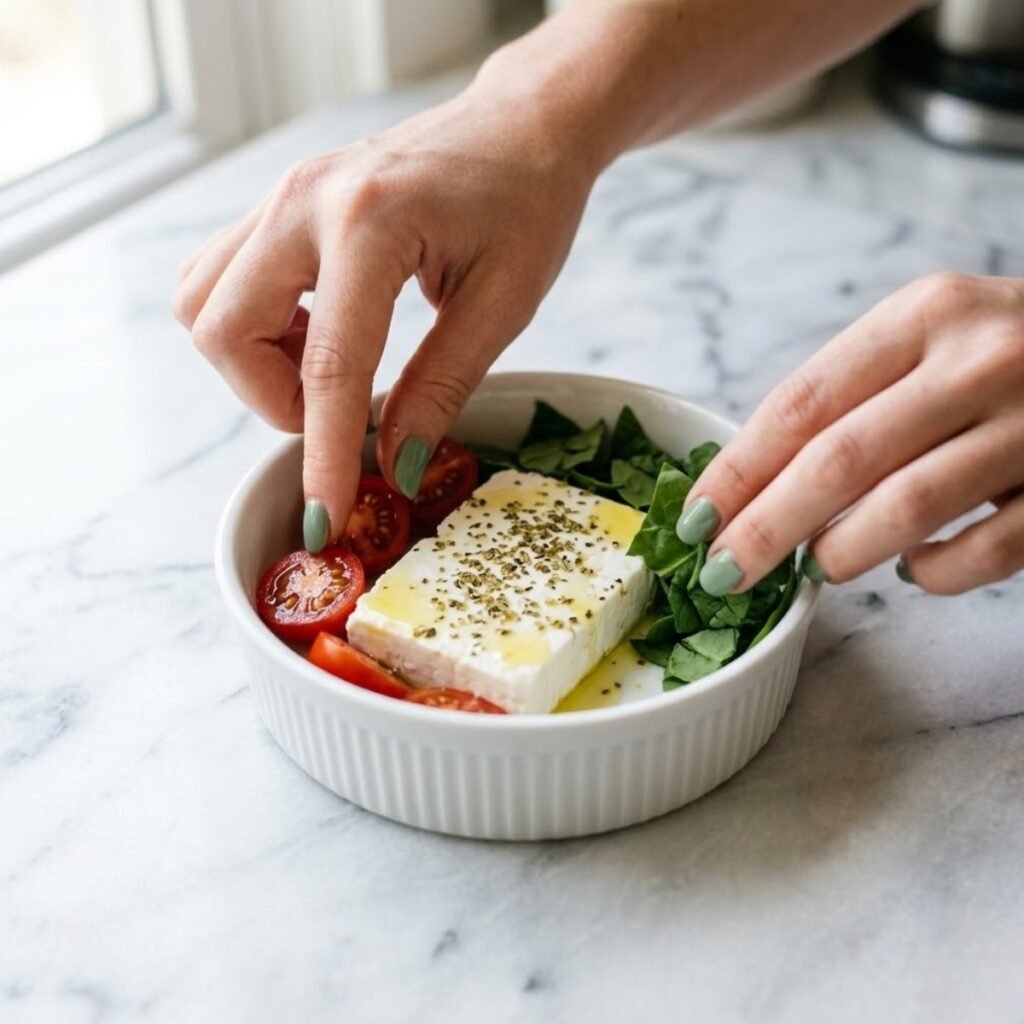
- Place the block of feta in the center of the oiled ramekin and arrange the halved cherry tomatoes cut side down directly against the feta so they press against it and release their juice into the base during the first bake.
- Scatter the torn baby spinach and diced red bell pepper around the feta, tucking the vegetables into the gaps between the feta and the dish wall so they form a loose, even base beneath the eggs.
- Drizzle the remaining olive oil over the feta and vegetables, then scatter the dried oregano and chili flakes evenly over the surface so every element receives some seasoning before the first bake begins.
- Add a light pinch of black pepper over the top but hold back on additional salt until the dish is finished, because the feta releases a significant amount of brine into the base as it heats and the dish can easily become oversalted if extra salt is added at this stage.
Step 3: Pre-Bake the Base, Then Add the Eggs
- Slide the baking sheet with the ramekin into the fully preheated oven and bake the feta and vegetable base alone for 10 minutes until the feta has softened noticeably at the edges, the tomatoes have begun to collapse and release juice, and the spinach has wilted completely into the base.
- Remove the baking sheet from the oven using oven mitts and set it on a flat, heat-safe surface; the base should be bubbling gently around the feta and the tomatoes should look blistered and slightly caramelized at their cut edges.
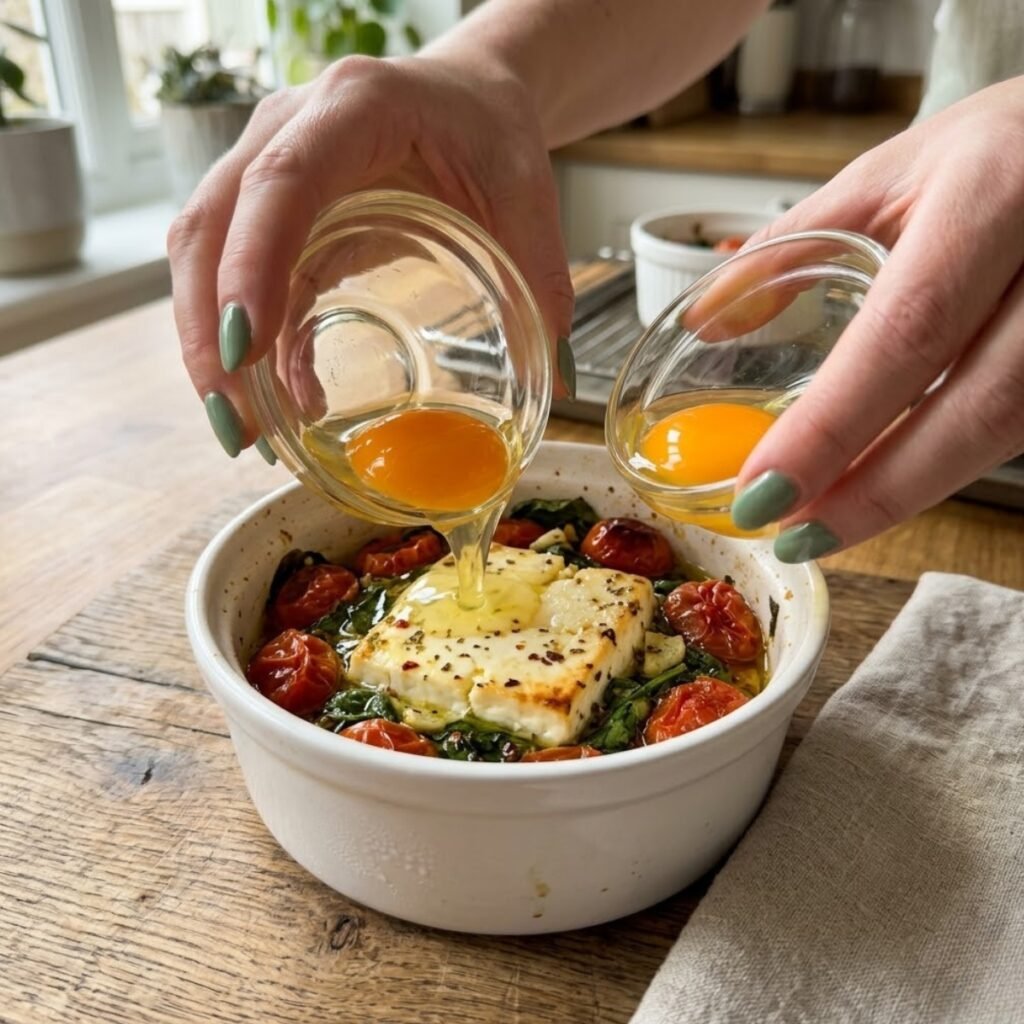
- Crack each egg into a small separate bowl first rather than directly over the ramekin, which allows you to check that the yolk is intact before it touches the hot base and gives you a moment to position the egg precisely before tipping it in.
- Tip each egg carefully over the bubbling base, positioning the yolks so they land in open spaces rather than directly on top of the feta block, then return the baking sheet to the oven immediately so the base does not cool and slow the egg cooking.
Step 4: Bake the Eggs, Garnish, and Serve
- Bake at 400°F for 8 to 10 minutes, checking at the 8-minute mark by opening the oven and observing the egg whites; the whites should look fully set and opaque all the way to the edge of the yolk while the yolk itself still appears glossy, domed, and trembles slightly when you nudge the baking sheet gently.
- If the whites still look translucent or shiny near the yolk at 8 minutes, return the dish to the oven for 1 to 2 more minutes and check again; once the yolk surface dulls and loses its sheen, the egg is past runny and moving toward fully cooked, so remove it promptly.
- Remove the ramekin from the oven, set it on the plate alongside the crusty bread slices exactly as shown in the image, and scatter the sliced green onions generously over the surface while the dish is still hot so they settle slightly into the warmth.
- Add a final pinch of chili flakes and black pepper directly over the yolks, set the gold spoon into the dish, and serve immediately because the eggs continue cooking from residual heat and the yolks will firm further within 2 to 3 minutes of leaving the oven.
Baked Feta Eggs Variations
Mediterranean Baked Eggs With Olives and Roasted Pepper
- Add 6 to 8 pitted Kalamata olives, halved, to the vegetable base alongside the tomatoes before the first bake, which introduces a deeply savory, briny note that makes the finished dish taste closer to a traditional Mediterranean egg recipe.
- Replace the fresh red bell pepper with 2 tablespoons of jarred roasted red pepper strips, which are already soft and sweet and integrate more smoothly into the base than raw pepper during the shorter pre-bake window.
- Scatter a pinch of dried thyme over the feta alongside the oregano for an additional herby layer that complements the olive and roasted pepper combination without competing with the egg flavor.
- This version works especially well for dinner alongside a small green salad and a slice of good bread, where the bolder flavors make it feel more like a light Mediterranean dinner than a breakfast dish.
Baked Feta Eggs With Spinach and Chili Honey Drizzle
- After removing the finished dish from the oven, drizzle a small teaspoon of warm honey mixed with a pinch of chili flakes directly over the yolks and feta before adding the green onions, which creates a sweet-heat glaze that runs into the egg whites and the edges of the dish.
- Increase the spinach to 1 full cup for this variation and press it firmly into the base before adding the feta so it forms a dense green layer underneath rather than sitting loosely around the sides.
- Finish with crumbled fresh feta scattered over the top after baking rather than relying on the baked block alone, which adds a cooler, saltier texture contrast against the warm, melted base.
- Serve with a slice of sourdough toast rubbed lightly with a halved garlic clove while still warm, which pairs with the chili honey in the same way baked feta with honey works as a stand-alone appetizer.
Vegetarian Mediterranean Baked Eggs for Two
- Double all ingredient quantities and use a larger oven-safe baking dish or two individual ramekins side by side on the same baking sheet so both portions cook in exactly the same time without any adjustment to the baking temperature or timing.
- Add a small diced zucchini and a few torn basil leaves to the vegetable base before the first bake for additional bulk and a more substantial vegetable base that makes this version feel more like a complete vegetarian meal with eggs than a single-serve breakfast.
- Crack 4 eggs total over the doubled base, spacing them evenly so each person gets 2 yolks visible on the surface when the dish comes to the table, which matches the visual generosity of the single-serve image while scaling the recipe for sharing.
- Serve in the baking dish at the center of the table with a basket of crusty bread alongside so both people can scoop directly from the same dish, which Anna says is the part she likes most about this version.
Substitutions
- Feta cheese can be replaced with goat cheese for a creamier, less salty base that melts more smoothly into the tomatoes; reduce the chili flakes slightly since goat cheese is milder than feta and the heat can feel more prominent without the salt of a brined cheese to balance it.
- Cherry tomatoes can be replaced with 3 tablespoons of good-quality canned diced tomatoes, drained of excess liquid before adding to the ramekin; canned tomatoes release less juice during the pre-bake than fresh ones and produce a slightly thicker, more concentrated base beneath the eggs.
- Baby spinach can be swapped for kale leaves with the stems removed and the leaves torn small, or for a handful of baby arugula added after baking rather than before so its peppery flavor stays fresh and does not wilt into bitterness during the oven time.
- Crusty bread for serving can be replaced with toasted pita, sourdough slices, or a simple grain-free flatbread for those avoiding gluten; the dish also works well served alongside a small bowl of plain thick yogurt rather than bread when a lighter accompaniment is preferred.
Equipment
- Oven-safe ramekin or small baking dish (at least 10 oz capacity)
- Small baking sheet
- Oven mitts
- 2 small bowls for cracking eggs separately
- Sharp knife and cutting board
- Pastry brush or fingertip for oiling the ramekin
- Gold or regular spoon for serving
Emma Tip: If you do not have individual ramekins, a small cast iron skillet works just as well and produces slightly crispier edges on the feta and vegetables where the metal makes direct contact. A 6-inch cast iron skillet is the ideal size for a single serving; anything larger spreads the ingredients too thin and the eggs cook faster than the base has time to warm through.
Storage Tips
Make Ahead Strategy
- The vegetable and feta base can be assembled in the ramekin up to 12 hours in advance, covered tightly with plastic wrap, and stored in the refrigerator so the only step left on the morning of serving is the pre-bake and then adding the eggs.
- Bring the refrigerated ramekin to room temperature for 15 minutes before placing it in the preheated oven, because a cold ramekin placed directly into a hot oven can crack if the ceramic is not rated for sudden temperature changes.
- Slice the green onions and store them in a small covered container in the refrigerator the night before so the garnish is ready the moment the dish comes out of the oven.
Refrigeration
- The fully baked dish can be covered and refrigerated for up to 1 day, though the yolks will set completely during storage and the texture of the reheated dish will be noticeably firmer than freshly baked.
- Reheat covered loosely with foil in a 325°F oven for 8 to 10 minutes rather than the microwave, which tends to turn the egg whites rubbery and causes the feta to release excess liquid that pools at the bottom of the dish.
- Add a fresh scatter of green onions and a small drizzle of olive oil after reheating to restore some of the freshness and visual appeal the garnish loses during refrigerator storage.
Freezing
- This dish is not suitable for freezing once the eggs have been added and baked, because egg whites become watery and grainy after freezing and thawing, and the feta separates from the vegetable base in a way that cannot be reversed.
- The vegetable base without the eggs can be prepared, baked for the initial 10 minutes, allowed to cool completely, and then frozen in the ramekin wrapped in two layers of plastic wrap for up to 4 weeks.
- Thaw the pre-baked base overnight in the refrigerator, bring to room temperature, and then proceed from the egg-cracking step on the morning of serving for a result close to freshly made.
My Grandma's Secret Worth Sharing
Emma's grandmother always said that the difference between a good egg dish and a memorable one was in how long you were willing to watch it. She never set a timer for eggs. She stood at the oven door and watched. When I told Anna this while we were waiting for the whites to set, she pressed her face close to the oven glass with both hands cupped around her eyes and reported back every 30 seconds like a small radar station. "Still jiggly," she said once. Then, "Less jiggly." Then, with great authority, "Ready." She was exactly right. My grandmother would have given her that spoon with both hands.
FAQs
What is the ideal baking temperature for baked feta eggs?
400°F (200°C) is the temperature that gives the best result for this recipe. It is hot enough to blister the tomatoes, soften the feta, and wilt the spinach during the 10-minute pre-bake, and then set the egg whites fully while leaving the yolks soft and runny during the 8 to 10 minute second bake. Lower temperatures, such as 350°F, extend the cooking time considerably and tend to produce rubbery egg whites before the feta has fully melted.
How do I know when the baked feta eggs are done?
Watch the egg whites rather than the yolks. The whites should look fully opaque and set all the way to the edge of the yolk with no translucent or shiny patches visible anywhere in the dish. The yolk should still appear glossy and slightly domed at the surface and should tremble just slightly when you nudge the baking sheet. Once the yolk surface turns dull and matte, it is moving past runny and will be fully cooked within another minute or two.
Why are my egg whites still runny after the recommended baking time?
The most common cause is skipping or shortening the pre-bake. If the vegetable and feta base goes into the oven cold alongside the eggs, the base absorbs the oven heat first and the eggs sit on a cold surface that slows their cooking considerably. Always pre-bake the base alone for the full 10 minutes until it is visibly bubbling before adding the eggs. A cold ramekin or a partially preheated oven are the other two most frequent causes of uneven, slow-setting whites.
The Dish That Made the Weekend Feel Longer
Anna carried the ramekin to the table with the kind of careful attention she usually saves for things she is genuinely proud of, and set it down on the white plate between the two slices of crusty bread exactly the way we had arranged it in the kitchen. We ate slowly and scooped the last of the feta and tomato from the edges of the dish with the bread until nothing was left except the gold spoon. If this becomes one of your slow weekend mornings too, you might also love our Air Fryer Cottage Cheese Tomato Toast for a faster weekday version of a similar idea, our Brownie Waffle when the weekend calls for something sweet alongside the savory, or our Keto Chocolate Chia Seed Pudding With Almond Milk for a no-bake make-ahead option that earns the same kind of slow morning feeling. Make this once on a Saturday and see whether it survives long enough to make it to Sunday.
Related
Looking for other recipes like Baked Feta Eggs? Try these:
- Japanese Soufflé Pancakes25 Minutes
- Sweet Potato Waffles30 Minutes
- Garlic Rosemary Focaccia Muffins35 Minutes
- Lemon Rhubarb Bread1 Hours 30 Minutes



Baked Feta Eggs
Ingredients
Equipment
Method
- Preheat the oven to 400°F (200°C) and allow it to reach full temperature; place an oven-safe ramekin of at least 10 oz capacity on a small baking sheet and drizzle the inside with half the olive oil, coating the base and sides with your fingertip or a pastry brush.
- Place the block of feta in the center of the oiled ramekin, then arrange the halved cherry tomatoes cut side down directly against the feta so they press against it and will release juice into the base during baking.
- Scatter the torn baby spinach and diced red bell pepper around and between the feta and tomatoes, then drizzle the remaining olive oil over the surface and distribute the dried oregano and chili flakes evenly over all the ingredients.
- Slide the baking sheet into the fully preheated oven and bake the feta and vegetable base alone for 10 minutes until the feta has softened at the edges, the tomatoes have begun to collapse and blister, and the spinach has wilted completely into the base.
- Remove the baking sheet from the oven using oven mitts and set it on a flat heat-safe surface; crack each egg separately into a small bowl first to confirm the yolk is intact, then tip each egg carefully over the bubbling base positioning the yolks in open spaces away from the feta block.
- Return the baking sheet to the oven immediately and bake at 400°F for 8 to 10 minutes, checking at the 8-minute mark; the whites should look fully opaque and set all the way to the edge of the yolk while the yolk itself still appears glossy, domed, and trembles slightly when the baking sheet is nudged gently.
- If the whites still look translucent or shiny near the yolk at 8 minutes, return the dish for 1 to 2 more minutes and check again; once the yolk surface turns dull and loses its sheen, remove the dish immediately as the egg is moving past runny.
- Remove the ramekin from the oven, set it on the plate alongside the crusty bread slices, scatter the sliced green onions generously over the surface while the dish is still hot, add a final pinch of chili flakes and black pepper over the yolks, and serve immediately with the spoon resting in the dish.


Leave a Reply