
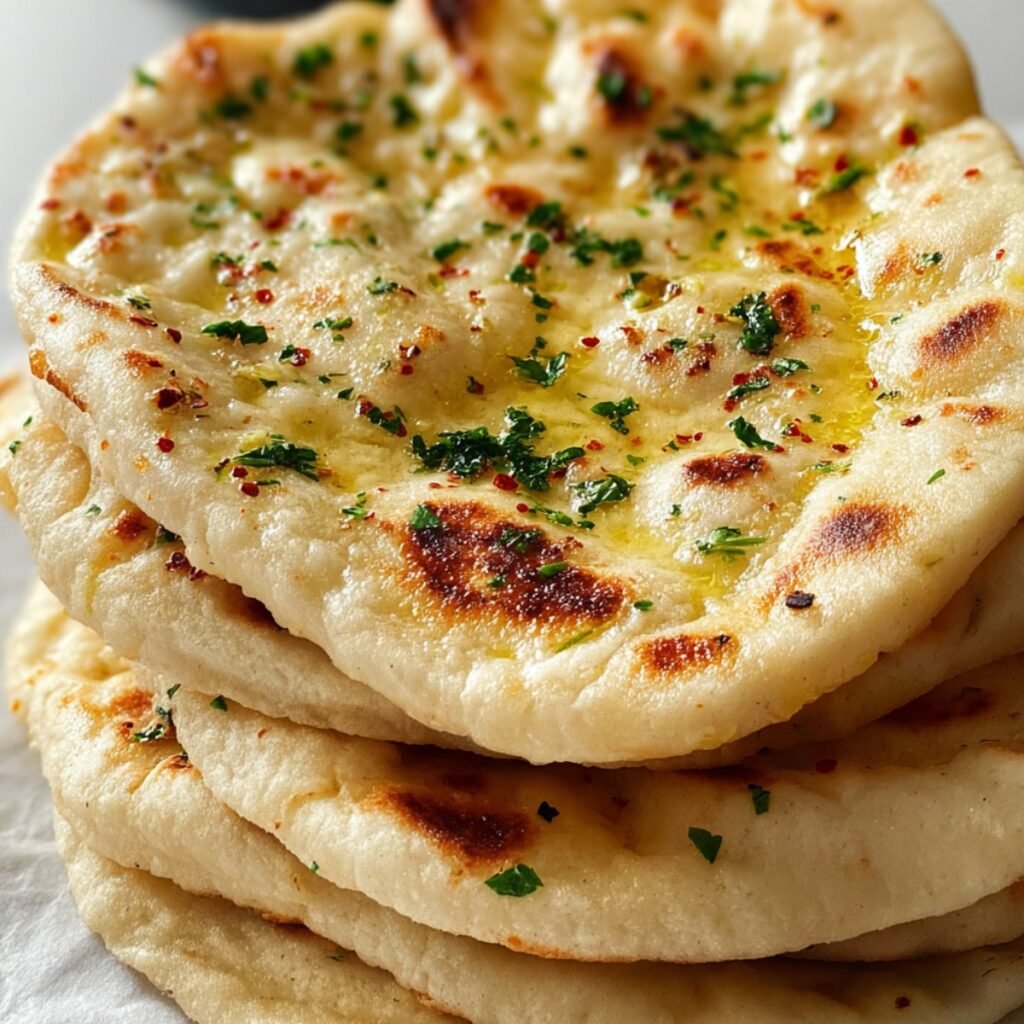
The kitchen feels wonderfully warm today as a yeasty aroma fills the air. Anna is standing on her stool, eagerly watching the dough puff up like a soft pillow in the hot skillet. We are making fresh Turkish Bread from scratch, brushing the golden tops with melted garlic butter. It is a very simple rustic bake making our afternoon feel incredibly cozy and completely special.
Jump to:
Why You Will Love This Turkish Bread
Finding authentic flatbread recipes that actually work in a home kitchen is a beautiful victory. This easy Turkish bread recipe delivers incredibly soft and pillowy results that pair perfectly with any meal. Anna loves tearing apart the warm pieces to dip into her soup, making it a fantastic lunch inspiration. It brings genuine comfort and rustic charm straight to your family dinner table.
How To Make Turkish Bread
The very first time I attempted homemade flatbread, I rolled the dough too thin and ended up with crispy crackers instead of soft bread. Anna tapped them on the counter, laughing at the loud crunch. We quickly learned that a gentle touch and proper resting time are absolutely essential. Now, flipping these puffy golden circles in the pan is our favorite shared victory.
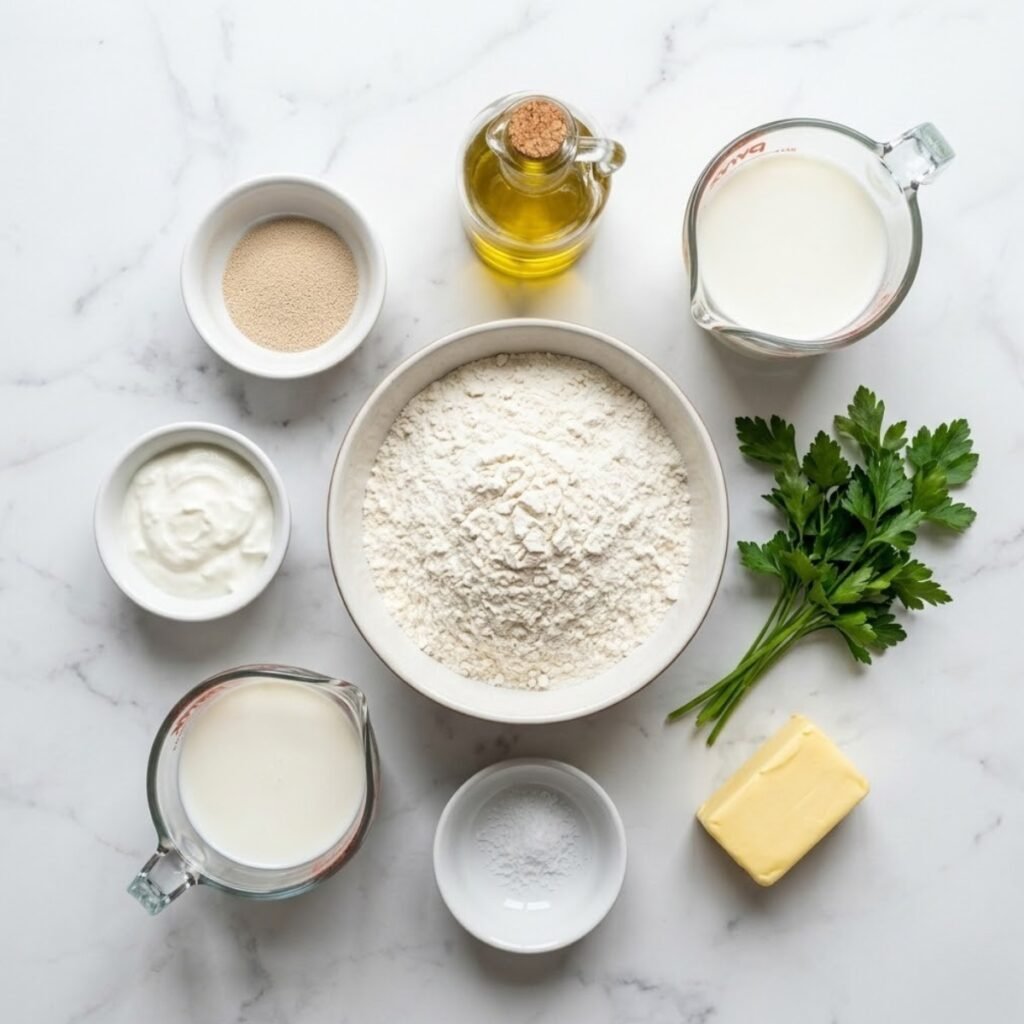
Main Ingredients
- All Purpose Flour (3 cups, provides the necessary structure while keeping the final texture beautifully soft)
- Active Dry Yeast (1 tablespoon, creates the signature bubbles and airy pockets inside the flatbread)
- Warm Milk (1 cup, tenderizes the dough and helps activate the yeast quickly and thoroughly)
- Olive Oil (2 tablespoons, adds a rich flavor and keeps the bread from drying out)
- Greek Yogurt (2 tablespoons, brings a wonderful tang and incredible moisture to the dough)
- Butter and Herbs (Melted and brushed over the warm tops for a beautiful flavorful finish)
Step by Step Instructions
1. Activate and Mix
- Whisk the warm milk, yeast, and sugar in a bowl until the mixture turns frothy.
- Add the olive oil and Greek yogurt into the liquid to create a rich base.
- Pour the flour and salt in gradually while stirring to form a shaggy sticky mass.
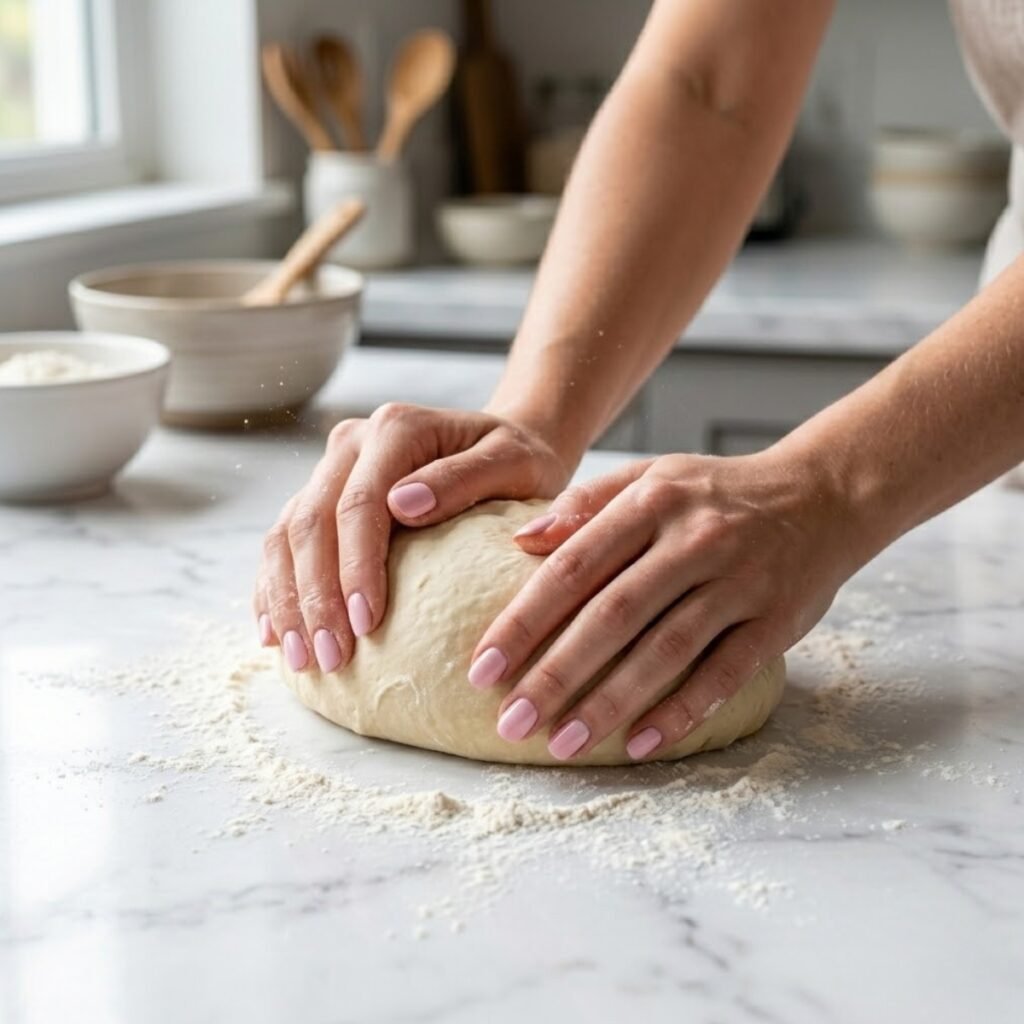
- Knead the dough on a lightly floured surface until it feels smooth and perfectly elastic.
2. Rest the Dough
- Place the smooth dough ball into a lightly oiled bowl to prevent any dry sticking.
- Cover the bowl securely with a warm damp towel to trap the essential rising moisture.
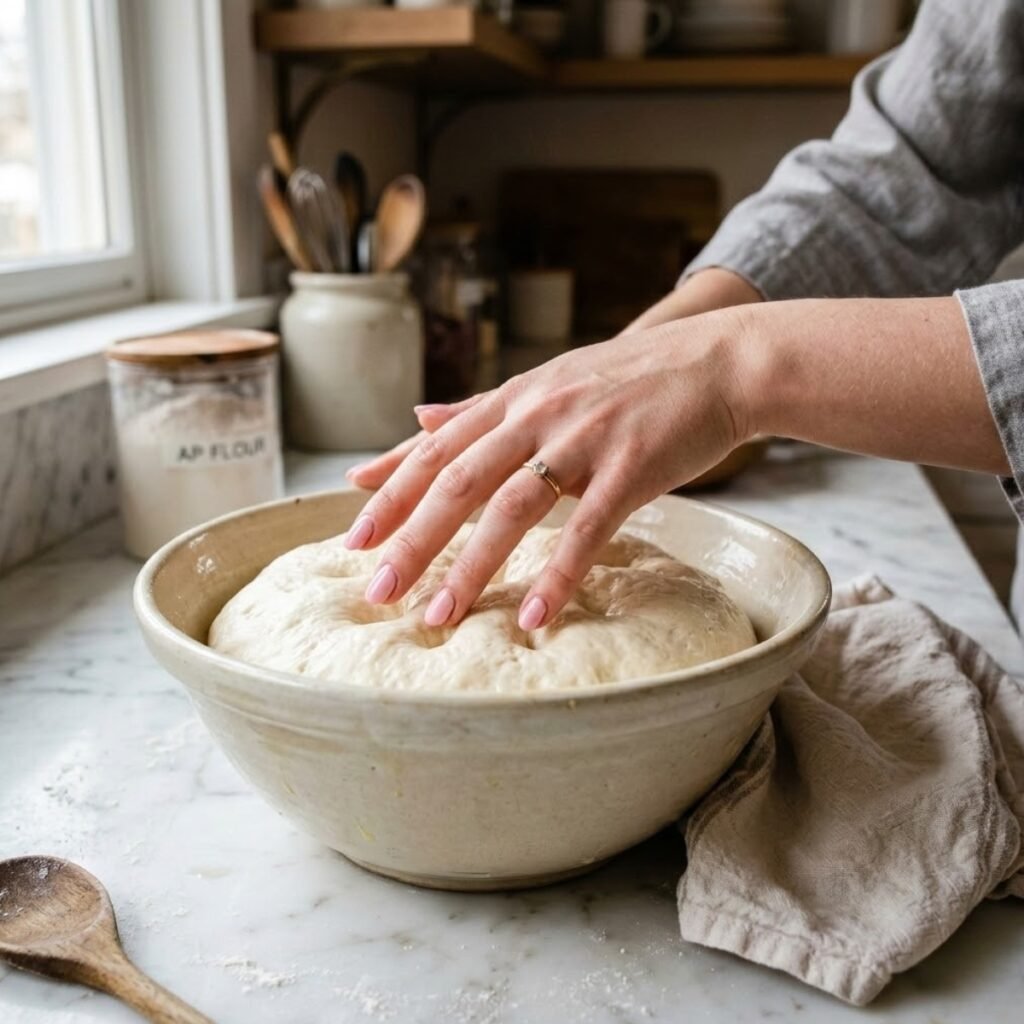
- Let it rest in a draft free spot until it completely doubles in physical size.
- Punch the risen dough down gently to release all the trapped interior air bubbles completely.
3. Shape the Flatbreads
- Divide the deflated dough evenly into six equal portions to ensure uniform cooking times later.
- Roll each dough portion into a neat tight ball using the palms of your hands.
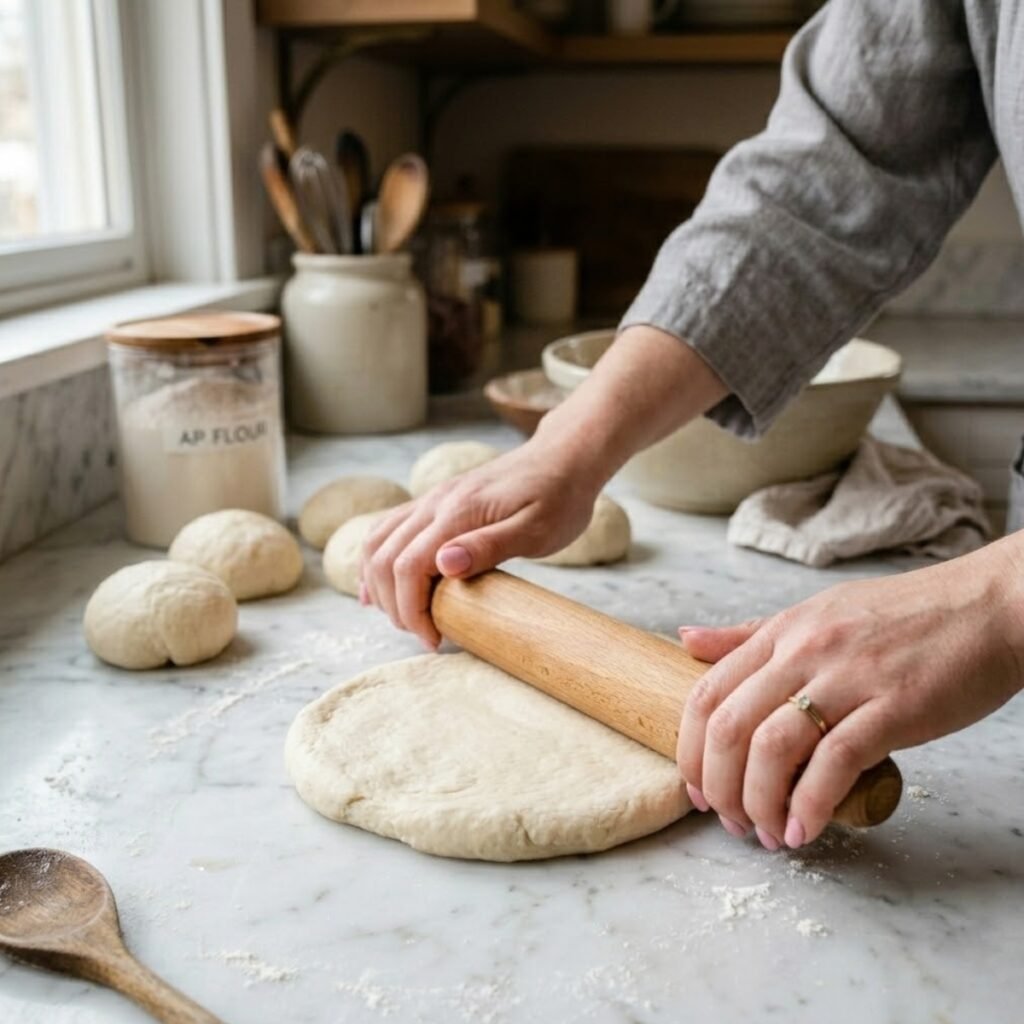
- Flatten each ball gently with a rolling pin until it forms a thick wide circle.
- Let the shaped circles rest for ten minutes so they puff up slightly before cooking.
4. Cook and Garnish
- Heat a dry skillet over medium heat until the pan feels radiating and evenly warm.
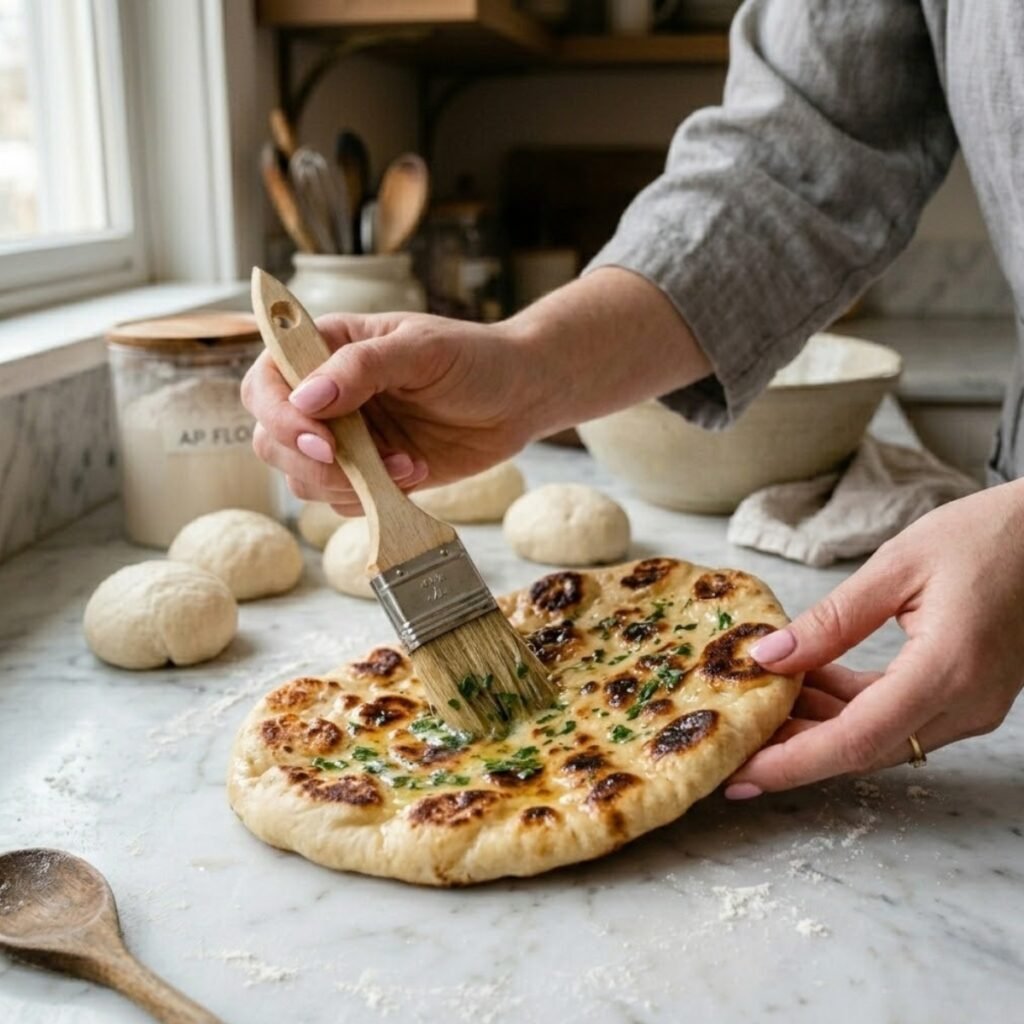
- Cook each dough circle for two minutes until the bottom develops deep golden brown spots.
- Flip the bread carefully to cook the other side until it puffs up beautifully high.
- Brush the warm bread immediately with melted butter and sprinkle heavily with fresh chopped parsley.
Turkish Bread Variations
Turkish Bread Pide Style
- Shape the dough into long ovals instead of classic round flatbread circles.
- Press your fingers deeply along the edges to create a small raised crust border.
- Fill the center lightly with cheese and spinach before baking them in a hot oven.
Turkish Bread For Kebab
- Roll the dough slightly thinner to create a more flexible wrap style bread base.
- Skip the garlic butter finish so the bread holds hearty fillings without becoming too messy.
- This variation is the ultimate easy snack recipes solution for leftover roasted meats and vegetables.
Spicy Herb Flatbread
- Knead a generous pinch of crushed red pepper flakes directly into the raw flour mixture.
- Brush the finished bread with an infused chili oil instead of traditional melted dairy butter.
- This adds a wonderful subtle heat that pairs beautifully with cool dips and fresh salads.
Substitutions
- Greek Yogurt: Sour cream is a fantastic alternative that provides the exact same rich moisture and tangy flavor profile to the yeast bread recipes.
- Active Dry Yeast: Instant yeast works perfectly, allowing you to skip the initial blooming phase and simply mix it directly into your dry flour base.
- Warm Milk: Unsweetened almond milk or oat milk serves as an excellent dairy free liquid substitute while still tenderizing the dough beautifully.
- All Purpose Flour: Bread flour can be used to create a significantly chewier texture, mimicking the classic authentic Turkish bread bite incredibly well.
Equipment
- Large Mixing Bowl
- Cast Iron Skillet
- Rolling Pin
- Pastry Brush
- Clean Kitchen Towel
Emma's Tip: If you do not have a rolling pin to flatten the dough, a clean empty wine bottle works wonderfully to press the circles out smoothly.
Storage Tips
Make Ahead Strategy
- Knead the dough completely and let it complete its first rise in the refrigerator overnight.
- Bring the chilled dough back to room temperature before dividing and shaping the individual portions.
- This slow cold fermentation actually deepens the authentic yeast flavor significantly for the best results.
Refrigeration
- Store fully cooled flatbreads in a sealed airtight bag to lock in their soft moisture.
- They will stay wonderfully fresh on the counter for two days or refrigerated for four.
- Do not leave them exposed to open air, as they will quickly dry out and harden.
Freezing and Reheating
- Freeze the cooked flatbreads in a single layer before transferring them to a heavy bag.
- Reheat them directly from frozen in a warm skillet or wrap them in foil in the oven.
- Brushing them with a tiny splash of water before reheating restores their soft pillowy texture.
My Grandma's Magic Touch
My grandmother always insisted that making bread was a conversation between your hands and the dough. She taught me to feel for the right texture, adding a little extra flour only when the dough asked for it. I shared this beautiful philosophy with Anna today as she pushed the heel of her hand into the sticky mass. We turned off the timer and simply watched the dough bounce back, trusting our instincts over a rigid clock. Teaching her to feel the bake rather than just follow steps makes passing down these traditions incredibly rewarding.
FAQs
What exactly is the traditional Turkish bread name?
The specific name often depends on the shape and baking method. Bazlama is the soft, pan cooked flatbread we are making today, while pide refers to the boat shaped baked variety.
Why did my flatbread not puff up in the pan?
Your pan may not have been hot enough, or the dough did not rest properly after rolling. A very hot surface creates the rapid steam necessary to puff the bread quickly.
How many Turkish bread calories are in one serving?
A standard homemade flatbread usually contains around two hundred calories before adding the melted butter finish. It is a hearty and deeply satisfying component to any balanced family meal.
Can I make this without a cast iron skillet?
Absolutely. Any heavy bottomed nonstick or stainless steel frying pan will work beautifully, as long as it retains heat well enough to scorch those signature golden brown spots on the crust.
A Golden Stack of Warm Comfort
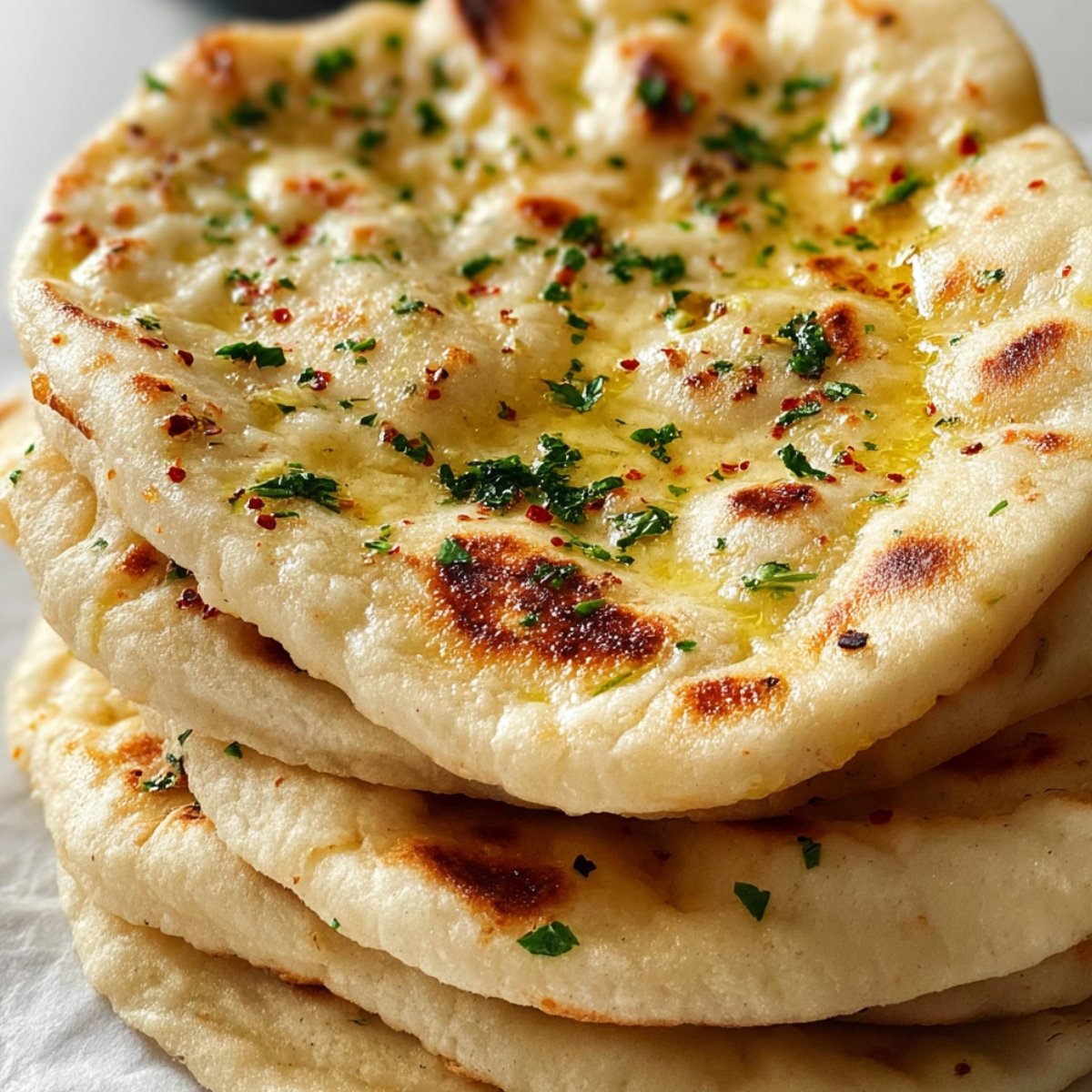
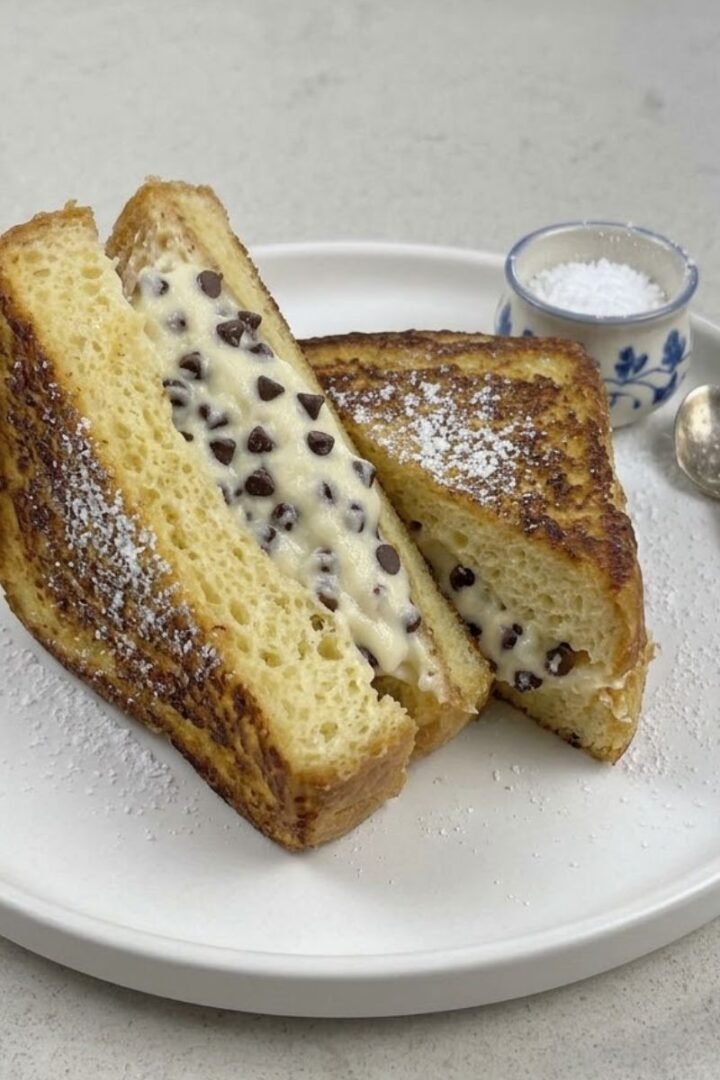
The finished flatbreads are piled high on a serving plate, steaming gently and smelling of fresh parsley and melting butter. Anna immediately grabs the top piece, marveling at how soft and flexible it feels in her hands. This rustic bread is just as satisfying to make as our hearty Homemade Calzone on a Friday night. If you prefer a sweet dough project next time, try our hidden Boston Cream Pie Hawaiian Rolls, or maybe use leftover flatbread alongside our High Protein French Toast spread for a diverse weekend brunch. For now, we are entirely focused on tearing into this warm, pillowy perfection.
Related
Looking for other recipes like Turkish Bread? Try these:




Turkish Bread
Ingredients
Equipment
Method
- Whisk the warm milk, yeast, and sugar in a large bowl until it becomes frothy.
- Stir in the olive oil and yogurt, then gradually add the flour and salt to form a dough.
- Knead the dough on a floured surface for five minutes until smooth and elastic.
- Place the dough in an oiled bowl, cover, and let it rise until doubled in size.
- Punch the dough down, divide it into six equal portions, and roll each into a tight ball.
- Flatten each ball with a rolling pin into a wide circle and let them rest for ten minutes.
- Cook each circle in a hot dry skillet for two minutes per side until puffed and golden.
- Brush the warm flatbreads with melted butter and sprinkle with chopped parsley before serving.


Leave a Reply